

John Warnock is the mind behind one of the most powerful digital revolutions in modern history. As the co-founder of Adobe, he helped build the digital document world people use every day. His work belongs to the software, digital publishing, computer graphics, and document technology industry, where he reshaped how information is created and shared.
Printing, design, publishing, reading, signing, editing, and digital creativity all changed because of his vision.
His journey is not only about building a company. It is about creating a new digital culture that changed how the world shares information.
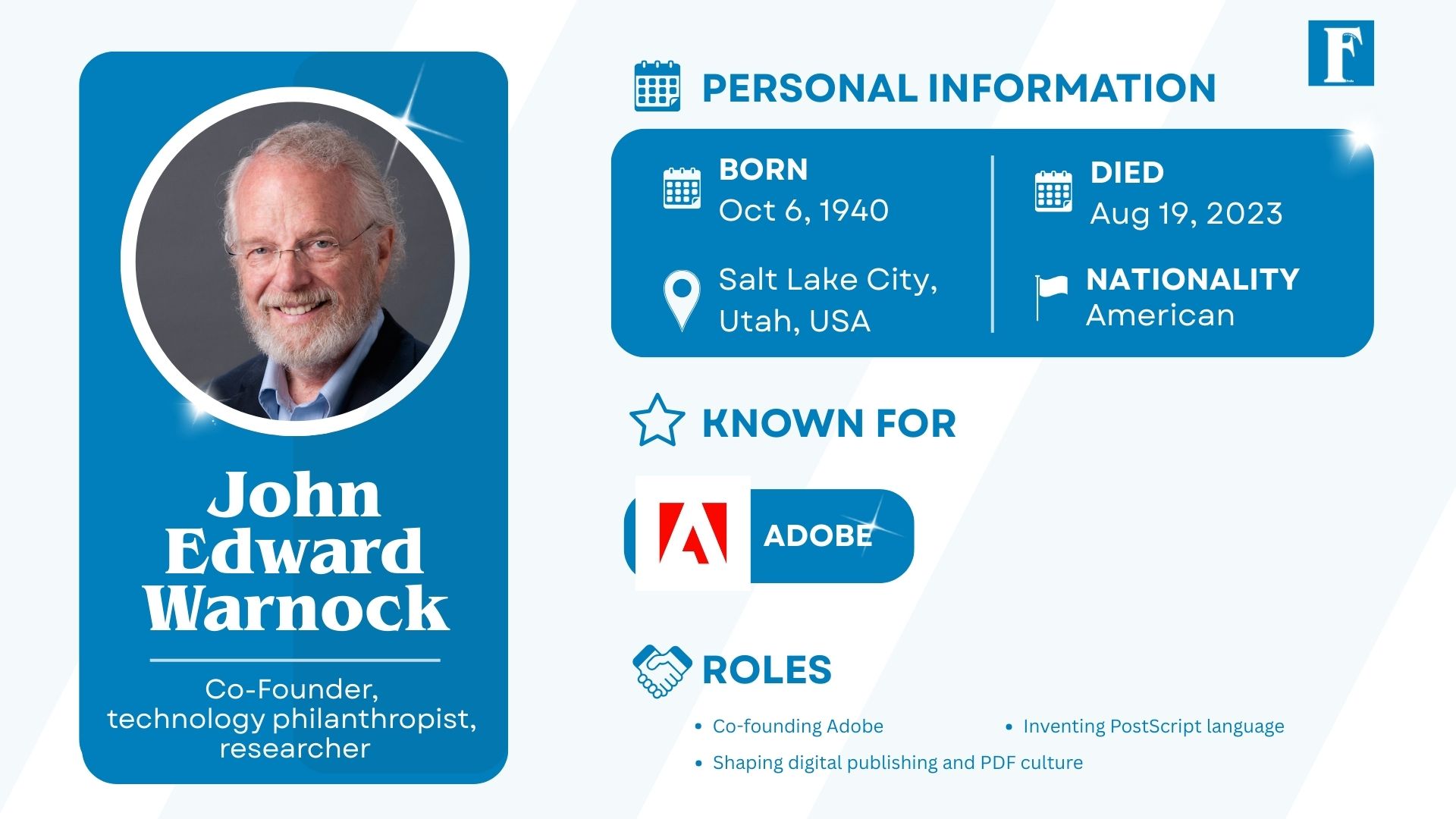
Early Life & Education
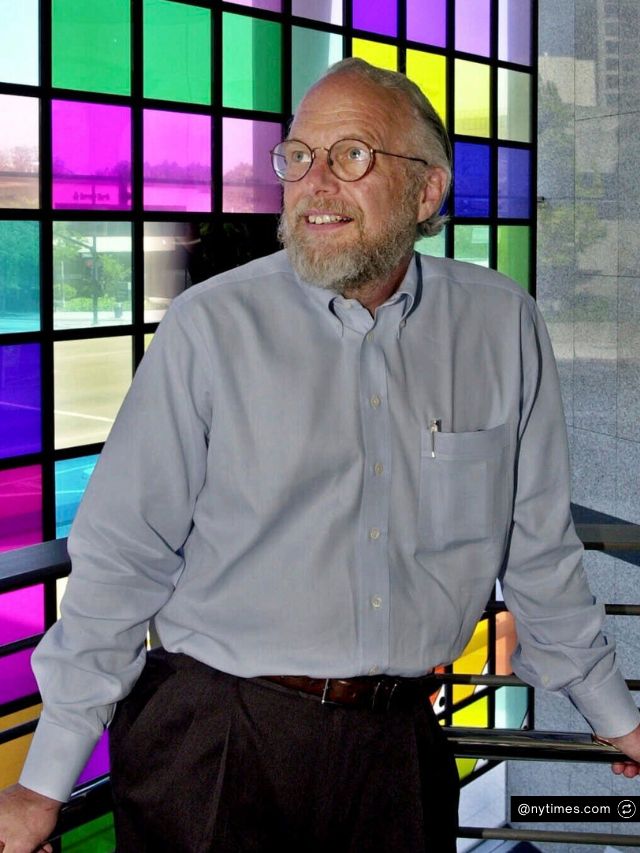
John Edward Warnock was born on October 6, 1940 in Salt Lake City, Utah. He grew up in a disciplined and value-driven home. His father worked in the printing industry, which shaped his early interest in books, paper, ink, and printing machines. This early exposure shaped his interest in how information moves between people.
Education played a major role in his thinking style. He studied mathematics and philosophy at the University of Utah, then moved into computer science and earned his PhD. His academic journey focused on logic, research, problem solving, and systems thinking.
According to the sources, Warnock showed deep interest in computer graphics and digital communication at a time when the digital world was still in its early stage.
He was not focused on money in his early years. He was focused on learning and understanding. This mindset later shaped his leadership style and the way he built his career.
Career Start & Key Breakthrough
John Warnock began his career in academic research and computer science labs. He worked at Evans and Sutherland Computer Corporation and later joined Xerox PARC, one of the most influential innovation labs in the world.
At Xerox PARC, he met Charles Geschke, who later became his cofounder. They worked closely on advanced printing systems and digital page description languages.
Their key breakthrough was the creation of PostScript, a powerful programming language that described text, graphics, and images in digital form for printing. This invention solved a major global challenge. Computers could create documents, but printers failed to read them clearly. PostScript transformed digital printing forever.
According to the sources, Xerox failed to fully support the commercial growth of PostScript. This rejection became the turning point. Instead of quitting, Warnock and Geschke chose to build their own company.
That decision changed digital history.
Company Overview: Adobe
In 1982, John Warnock and Charles Geschke founded Adobe Systems in California. The company name came from Adobe Creek, a small stream near Warnock’s home.
Adobe started as a printing and publishing technology company. Its first mission was simple yet powerful: help computers talk to printers in a universal language.
PostScript became the foundation of Adobe’s early success. Soon, Apple adopted PostScript for LaserWriter printers, making Adobe an industry standard.
Later, Adobe created PDF, which became the global format for digital documents. Contracts, books, manuals, resumes, government forms, research papers, legal files all started using PDF.
Major Achievements
- Co-founded Adobe Systems, Inc., a global leader in digital creativity and document solutions, in 1982 with Charles Geschke.
- Co-creator of PostScript, a page description language that powered the first desktop publishing revolution and transformed printing and publishing.
- Led Adobe as President, CEO and Chairman for decades, guiding the company’s vision and technology direction.
- Pioneered the development Portable Document Format (PDF), a universal file format that changed how documents are shared, viewed and archived worldwide.
- Oversaw key Adobe innovations such as Illustrator, Acrobat, Photoshop and other creative products that shaped digital content creation.
- Received the National Medal of Technology and Innovation, one of the highest honors for technological achievement in the United States, awarded by the President.
- Received the National Medal of Technology and Innovation, one of the highest honors for technological achievement in the United States, awarded by the President.
- Named a Fellow of the Association for Computing Machinery (ACM) and elected to the National Academy of Engineering, affirming his influence on engineering and computing
- Held more than 20 patents for innovations in graphics, printing and document technology.
John Warnock Net Worth
John Warnock Net Worth has always been a topic of interest. According to the sources, his wealth was built mainly through Adobe shares, long-term stock growth, and leadership equity.
Estimates place John Warnock Net Worth in the range of hundreds of millions of dollars at peak valuation. Some financial sources place it above $500 million during Adobe’s strongest growth phases. His wealth was not built through short-term exits. It was built through decades of value creation.
Funding & Growth Timeline
Adobe Founded
John Warnock co-founded Adobe Systems Inc. with Charles Geschke in California.
First Product & Apple Partnership
Adobe released PostScript and secured Apple Computer as its first major license partner.
Early Licensing Deals
Adobe entered licensing deals to expand font and PostScript adoption.
Desktop Publishing Revolution
PostScript became the engine of desktop publishing through LaserWriter integration.
IPO (Initial Public Offering)
Adobe conducted its initial public offering, moving into public markets.
Illustrator Released
Adobe launched Illustrator, extending growth into vector graphics software.
Photoshop Emerges
Adobe released Photoshop 1.0, boosting its role in digital imaging.
PDF Introduced
The Portable Document Format and Acrobat were launched, creating a new document standard.
Macromedia Merger
Adobe acquired Macromedia, adding major web and multimedia tools to its portfolio.
PDF Open Standard
PDF became an international open standard (ISO 32000-1), expanding its global reach.
Lessons to Learn
1. Solve real problems, not popular ones: John Warnock built solutions for real pain points in printing and document sharing, showing that meaningful problems create lasting businesses.
2. Strong fundamentals beat shortcuts: His deep knowledge of computer science and research helped him build technology that stayed relevant for decades, not just product cycles.
3. Rejection can be a hidden advantage: When Xerox did not fully back PostScript, he chose to build independently, proving setbacks can open bigger opportunities.
4. Think in decades, not quarters: Adobe products like PDF were designed for long-term use, teaching founders to build with the future in mind, not quick wins.
5. You do not need noise to create impact: Warnock stayed away from hype and personal branding, yet changed global digital systems, proving quiet focus can create massive influence.
Fun Facts / Quotes
“Innovation happens when people are given the freedom to explore and solve real problems.”
Social Links
FAQ’s

Hi, I’m Harsh Sahani, the creator of Founderspedia. The idea for this platform came from my deep interest in founder stories. Their struggles, thoughts, and the way they build something valuable always inspire me. I have always dreamed of building my own business, and reading about successful people’s journeys keeps me motivated.