
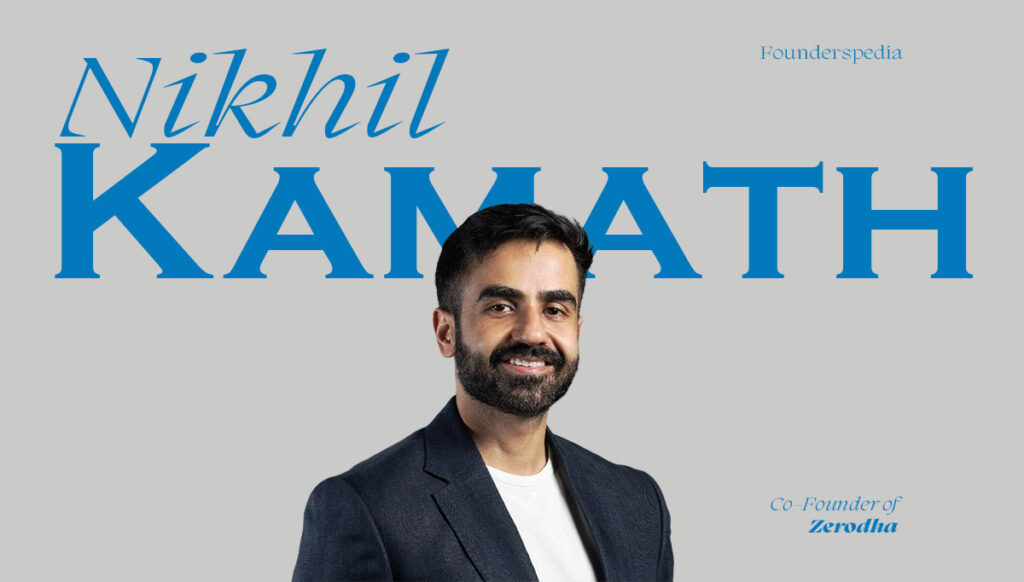
Nikhil Kamath is one of India’s youngest self made billionaires and the co founder of Zerodha, a company that changed how millions of Indians invest in the stock market.
He started life with limited resources, skipped college, learned trading through experience, and built a fintech giant that runs profitably without outside funding. His story feels real, bold, and inspiring, especially for young builders who believe skills matter more than degrees.
Early Life & Education
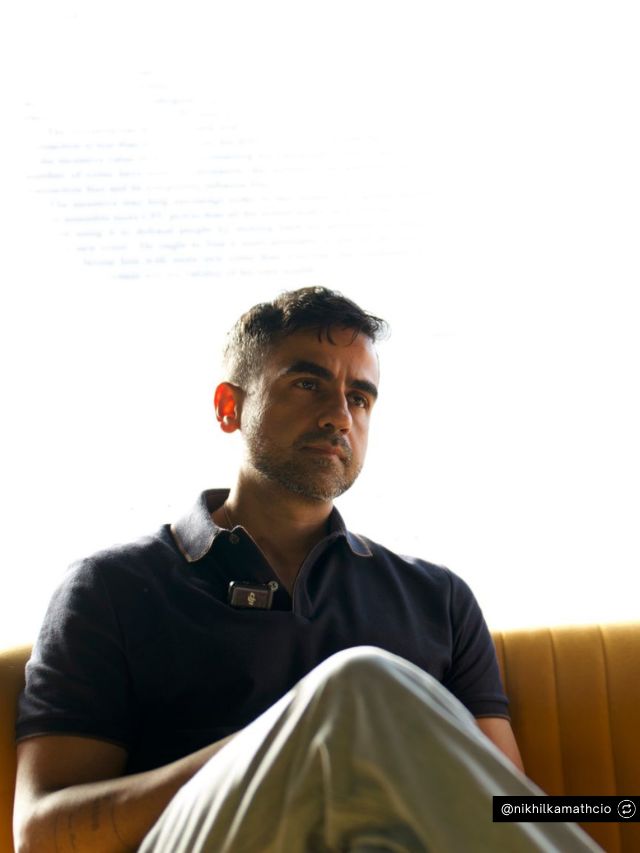
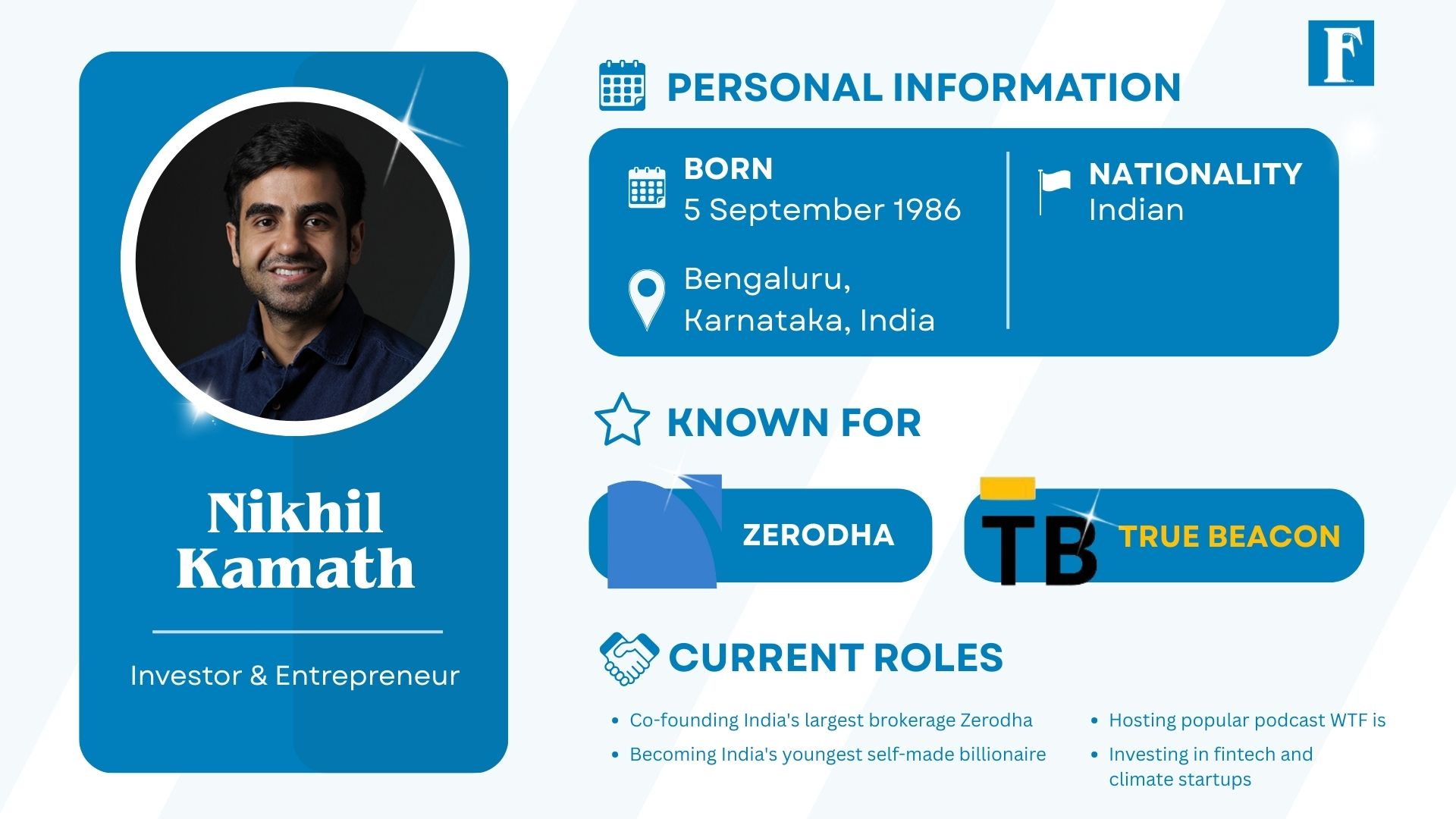
Nikhil Kamath was born in Bengaluru into a middle class family. His father worked at a bank and his mother taught classical music. Money was limited during early years, which shaped his thinking around independence and risk.
School life never felt exciting. Traditional education did not match his curiosity. He dropped out after class 10 and chose a different road. Many saw this choice as risky, but it later became a key part of his journey. Learning happened through books, markets, mistakes, and real life pressure.
Chess played a big role during these years. Playing at a competitive level trained his mind to plan ahead, take smart risks, and stay calm under pressure. These skills later helped him in trading and business decisions. These lessons later shaped his trading mindset.
Career Start & Key Breakthrough
At age 17, Nikhil Kamath began working at a local call center to support himself. During night shifts, he spent free time reading about stock markets. Curiosity soon turned into action.
He spent many hours studying stock charts, learning technical analysis, and observing market trends. Trading began as a small experiment and soon became a strong focus. Early trades resulted in losses, which taught him the importance of discipline and emotional control. Instead of giving up, he worked on improving his approach.
He placed strong attention on risk management and protecting capital. Profits appeared slowly but stayed consistent. By his early twenties, his trading income exceeded his call center earnings, which led him to leave the job and focus fully on the markets.
One key realization changed his direction. High brokerage fees were reducing trader profits, especially for active traders. Many platforms charged heavy costs and used outdated systems. This gap created frustration and later became the base of a new business idea.
Company Overview: Zerodha
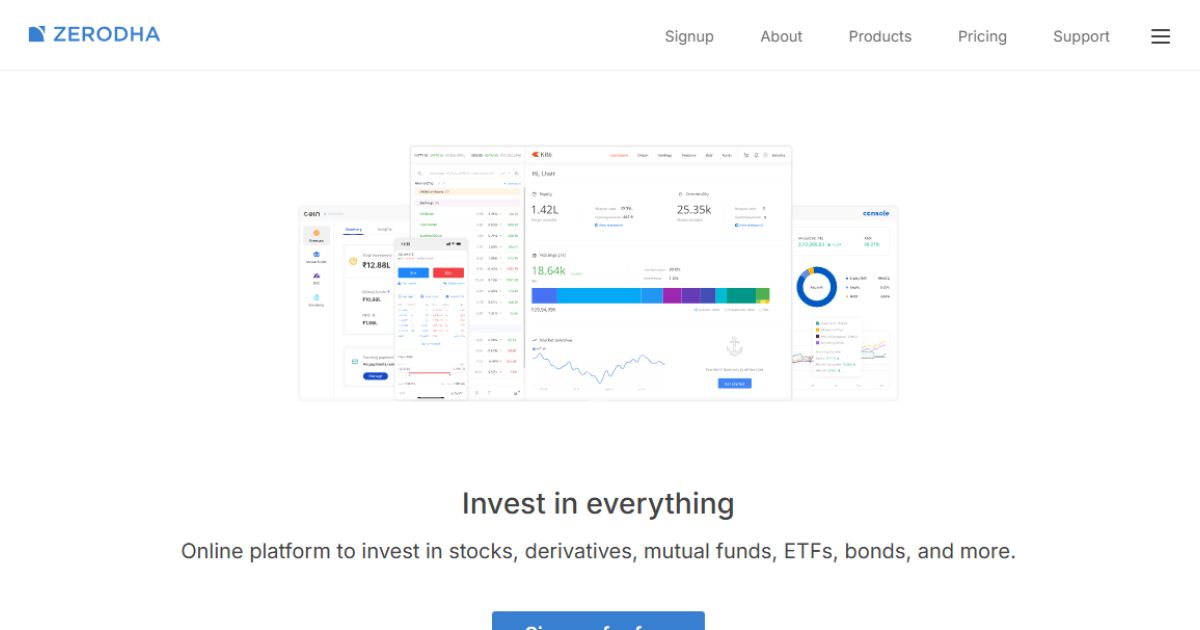
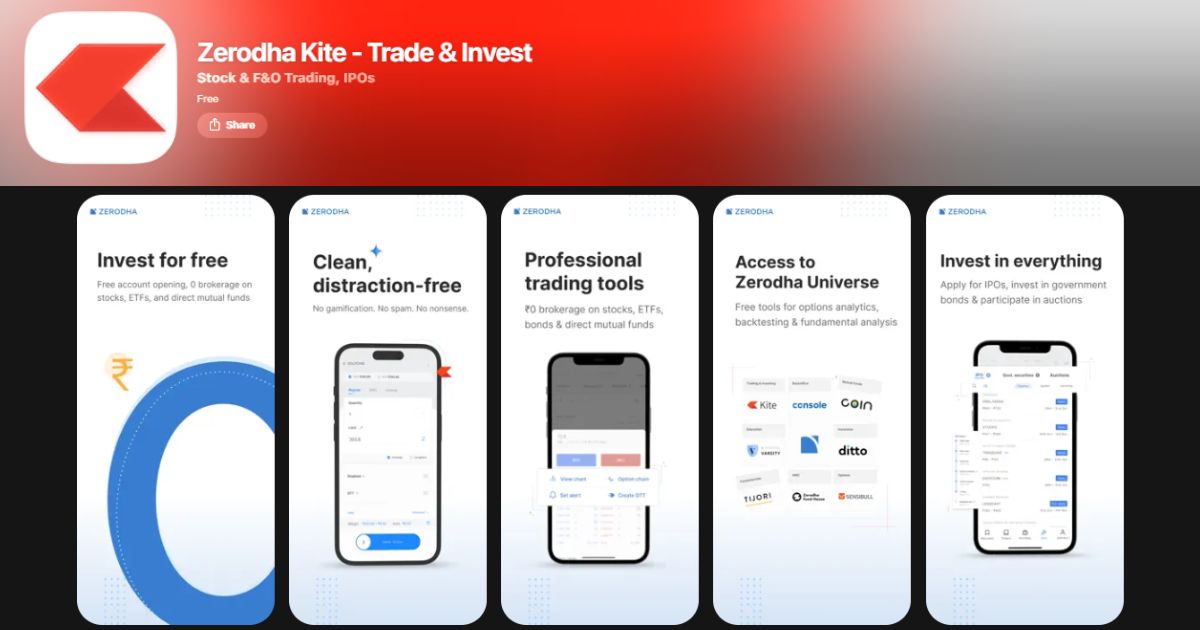
In 2010, Nikhil Kamath joined hands with his elder brother Nithin Kamath to start Zerodha. The idea was clear and bold. Trading needed to be low cost, transparent, and driven by technology.
Zerodha moved away from percentage based commissions and launched a flat fee model. This made trading fair for active traders and long term investors. The platform focused on fast performance, strong systems, and clear pricing. There were no hidden costs and no pushy sales calls.
The early phase was challenging. Marketing spend stayed small, and trust grew one trade at a time. Early users shared their experience with others, and word of mouth helped the platform grow. The simple design and honest approach became its biggest strength.
Over 15 years, Zerodha grew to 7.5 million active users and handled 15 percent of retail trading volume. The company stayed bootstrapped and profitable every year, reaching unicorn status in 2020 with a $1 billion valuation. Beyond broking, it supports learning through Varsity and backs startups through Rainmatter.
Major Achievements
- Became one of the youngest self made billionaires in India, largely due to ownership stake in Zerodha and related ventures, as recognised by Forbes wealth trackers.
- Included in Forbes 40 Under 40: Richest Self-Made Billionaires Under 40 list, ranking among global entrepreneurs who achieved billionaire status before age 40.
- Named among Forbes India’s list of India’s 100 Richest, with Zerodha co-founder status earning him one of the youngest ranks on that list.
- Co founded Zerodha in 2010 and helped scale it into India’s largest retail stock brokerage by active clients.
- Helped Zerodha achieve sustained profitability without venture funding, making it one of the most successful bootstrap fintech firms in the industry.
- Co founded True Beacon, an asset management company that brings transparent fee structures to high net worth investing.
- Helped launch Rainmatter, an investment initiative that supports early stage startups in fintech, climate, education and health sectors.
Nikhil Kamath Net Worth
According to widely cited sources like Forbes, Nikhil Kamath’s net worth at around USD 3.3 billion as of early 2026. This places him among the youngest self made billionaires in the world.
This valuation mainly reflects his ownership in Zerodha and related ventures, along with his role as co founder and Chief Financial Officer of the Bengaluru based brokerage firm that changed the way retail investing works in India.
Some financial media platforms report slightly different figures, usually placing his wealth between USD 2.6 billion and USD 3.1 billion, based on public information about Zerodha’s valuation and his personal assets. Still, the most widely accepted estimate remains close to USD 3.3 billion.
Funding & Growth Timeline
Early Capital Stage
Nikhil Kamath and his brother used personal trading profits and small business income to shape the Zerodha idea.
Company Launch
Zerodha launched without institutional funding and ran entirely on founder capital, making it a bootstrapped startup.
Survival Phase
The company struggled early. Nikhil Kamath continued active trading to manage daily operating costs.
Break Even Phase
Zerodha reached operational break even through rising trader adoption and a flat fee model, without outside funding.
Technology Expansion
Profits were reinvested to build platforms like Kite, improving scale and system stability.
Profitable Growth Phase
Zerodha emerged as one of India’s most profitable fintech firms, based on public revenue reports.
Industry Leadership Stage
Zerodha crossed ten million clients while staying debt free and venture free.
Lessons to Learn
1. Skills create real freedom: Practical skills like trading, risk control, and decision making helped Nikhil build income early. Skills compound faster than certificates and give control over career direction.
2. Protect capital before chasing growth: Early trading losses taught him one rule clearly. Survival matters more than fast profits in markets and business.
3. Keep costs low and systems simple: Zerodha succeeded because pricing stayed transparent and tools stayed easy to use. Simplicity builds trust and scales smoothly.
4. Solve real pain points: Zerodha existed because traders felt frustrated with high brokerage fees. Businesses win when they remove genuine problems.
5. Money is a tool, not the goal: Wealth supported freedom, learning, and impact. Chasing purpose made success more meaningful and sustainable.
Fun Facts / Quotes
“If you’re 25 and going to an MBA college today, you must be some kind of idiot.”
Social Links
FAQ’s

Hi, I’m Harsh Sahani, the creator of Founderspedia. The idea for this platform came from my deep interest in founder stories. Their struggles, thoughts, and the way they build something valuable always inspire me. I have always dreamed of building my own business, and reading about successful people’s journeys keeps me motivated.